Services
Dental Services Offers
Our Services

Teeth Whitening
A cosmetic dental technique called teeth whitening tries to whiten teeth by removing stains and discolouration.
Bleaching with hydrogen peroxide or carbamide peroxide and using abrasive tools to remove surface stains are two of the most popular ways to whiten teeth. It is crucial to remember that teeth whitening is not a permanent solution and may eventually need maintenance or touch-ups. Before having any teeth-whitening procedures.
Gum Bleach-Pink Gums
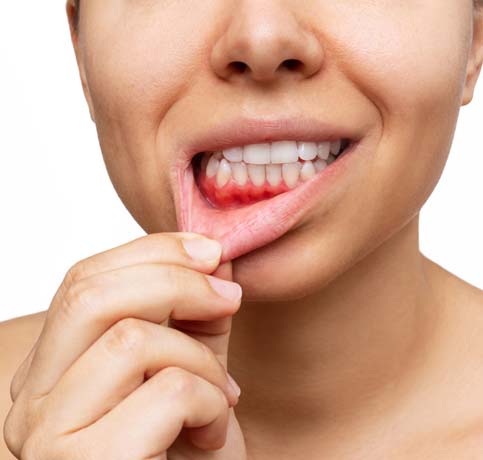
The cells that create pigmentation are eliminated during laser gum depigmentation by vaporizing and scraping away a thin top layer of gum tissue. Pink instead of brown new tissue is frequently formed during healing. A local anesthetic injection may be necessary for the procedure, and the recovery period is brief and the pain is tolerable.
3d Root Canal
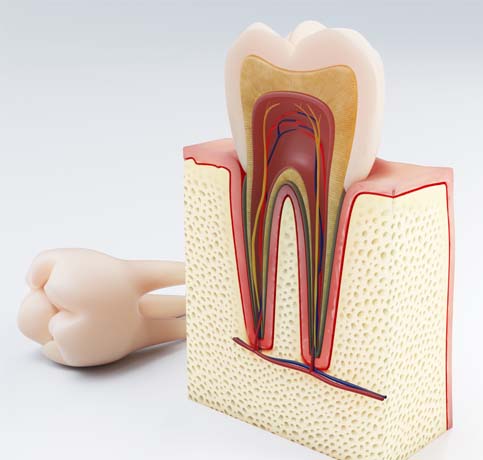
3D Root Canal is an advanced endodontic procedure utilizing three-dimensional imaging for precise diagnosis and treatment of root canal issues. This innovative approach enhances efficiency, reduces discomfort, and allows for personalized care tailored to each patient’s unique dental anatomy. It represents a modern and superior method in addressing root canal challenges.
Dental Implants
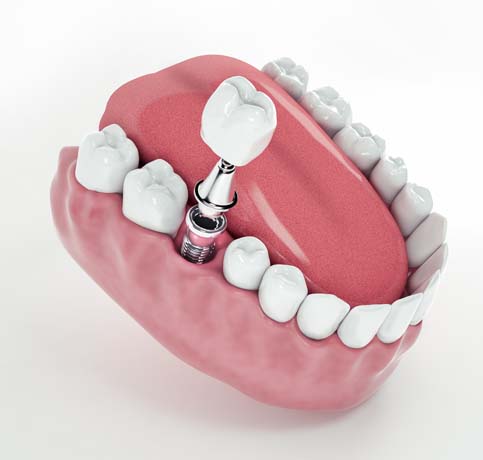
A tooth’s crown and root are its two main parts. The optimum root replacement for a missing tooth would be an implant with a crown put on top of it. The crown that has been fixed performs all of the same tasks as a natural tooth and serves as an active tooth. Dental technology has advanced to the point where a missing tooth can be replaced with an implant in as little as 24 hours.
Lasers
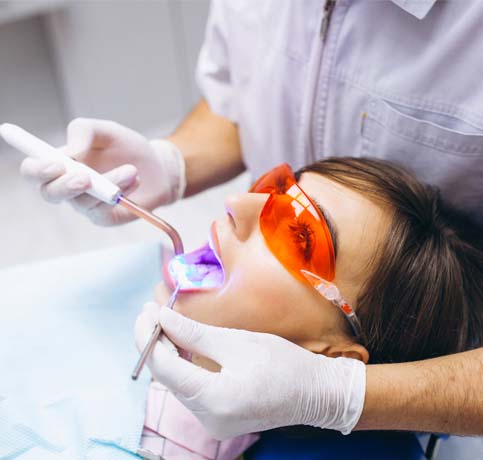
Dental lasers create a particular frequency of light that has antibacterial properties and speeds up the healing process of wounds. Due to its antibacterial qualities, it can be used to treat a variety of dental diseases affecting the hard and soft tissues of the oral cavity, including overgrowth tissue removal, gum recontouring, teeth whitening, root canal procedures, etc. We can use dental lasers to achieve the highest level of disinfection and germ control because this light can fit through even the smallest of openings.
Veneers
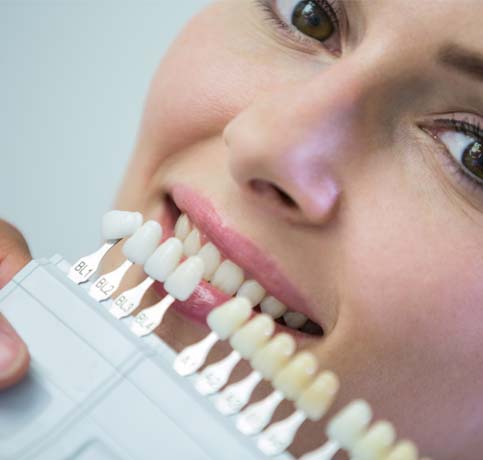
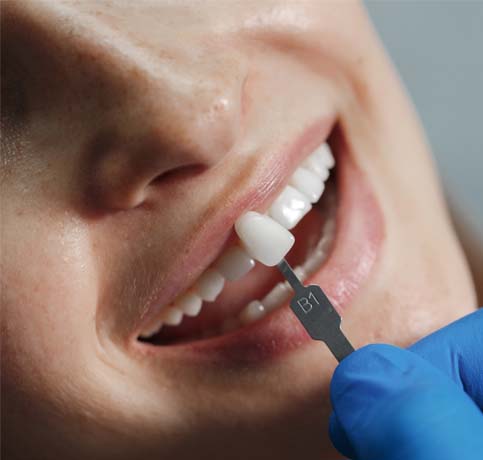
Dental veneers are extremely thin tooth-colored shells that are bonded to the front of teeth to improve their look. They can be applied to address aesthetic issues like smaller-than-average teeth or teeth that are damaged, chipped, or damaged.
Your teeth are permanently glued to dental veneers, which are frequently constructed of porcelain or resin-composite materials.
In the event of a cracked or damaged tooth, some people may only need one veneer, while many have six to eight veneers in order to achieve a uniform, symmetrical smile.
The upper eight front teeth receive veneers the most commonly.
Laminates
Dental laminates can treat issues including damaged teeth, poor dental health, fractured teeth, crooked teeth, and a set of teeth that are not properly aligned. Additionally effective at filling gaps between the teeth are dental laminates. The nice part about laminate is that they are quite thin, thus the individual having them has no problems.
Smile Designing
Smile design is a collection of different cosmetic dentistry operations that are used to enhance the look of the teeth and overall smile, such as teeth whitening, veneers, composite bonding, dental implants, and orthodontics.
Patients who have damaged or significantly discolored teeth, as well as those who are dissatisfied with the general length or shape of their teeth, should strongly consider this alternative.
Each patient’s treatment plan is unique and takes into account their unique characteristics, including their facial structure, skin tone, gum tissues, and lips. This produces a perfect smile that appears natural.


Full Mouth Rehabilitation
When performing a whole mouth rehabilitation, the operation can either be organized around groups of teeth or all the teeth in one arch can be prepped and restored at once. The latter is difficult for the patient and exceedingly time-consuming for the dentist.
Aligners
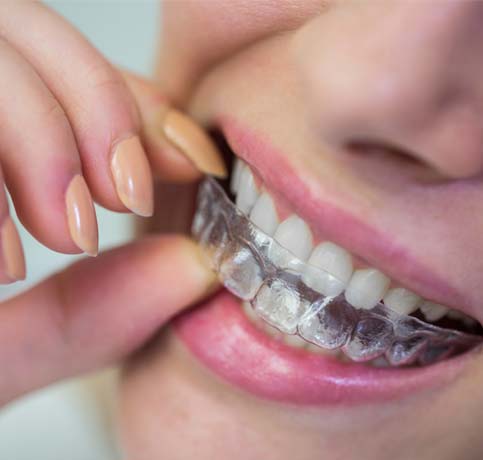
Without the use of unsightly wires, Invisible Aligners are a sort of transparent orthodontic appliance that straightens your teeth. Each patient’s aligners are manufactured specifically for them after having their teeth digitally scanned and then transferred to memory trays.
These are preferable to braces since they may be removed when eating or snacking and are virtually imperceptible. The days of getting trapped with sticky food are over, so unwind! Put your invisible braces back in after removing them to chew food, brush your teeth, and floss.
You will get new clear braces every two weeks. Each tray works together to gradually enhance your smile.
Braces
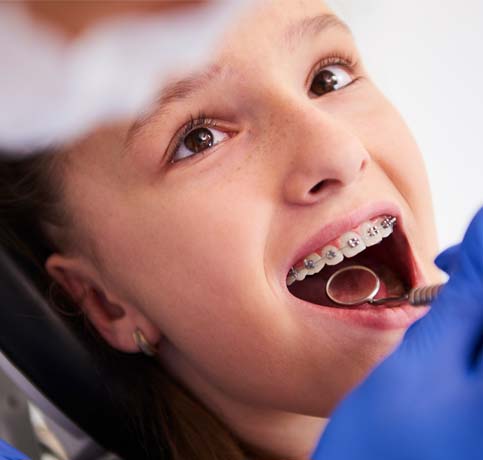
In order to solve dental problems including crowding, crooked teeth, or out-of-alignment teeth, braces are dental tools. Additionally, it can be utilized to enhance your smile. Teenagers frequently get braces, but adults can also get them. As you wear braces, they progressively realign and straighten your teeth, giving you a normal bite.
Your dentist or orthodontist will interview you about your health, do a clinical examination, digitally scan your teeth, take photos of your face and teeth, and request X-rays of your mouth and head before recommending a course of treatment for you. You can select lingual, ceramic, or metal braces depending on the treatment strategy.
Pediatric Dental Care
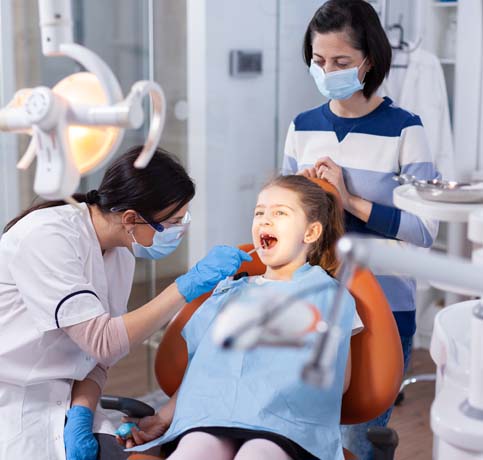
One of the seven recognised clinical dental specialties is pediatric dentistry. All aspects of adult dentistry that can be used on children are covered in this. However, it also contains a lot of practices that are particularly tailored to the unique requirements of primary (baby) teeth and difficulties of the developing child. Pediatric dentistry differs significantly from adult dentistry in that it requires dentists to treat children to comprehend and put good psychological principles into practice in order to ensure that children have happy, largely pain-free experiences in this crucial area of health.
Oral & Maxillofacial Surgeries
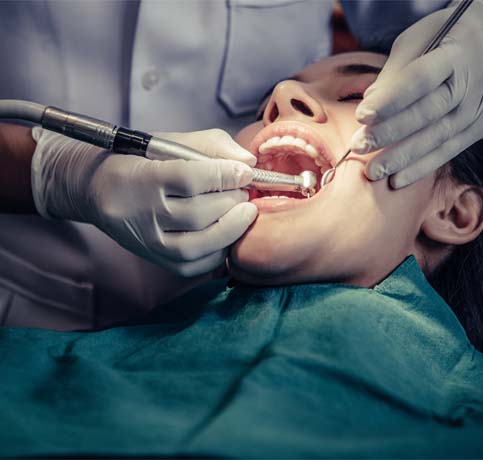
Maxillofacial surgery is a special area of dentistry that focuses on relocating or correcting the jaw. Also known as orthognathic surgery, this type of surgery involves cutting into your face, jaw, or mouth to repair diseases, injuries, and faults. Maxillofacial surgeons are highly trained specialists who recognise and treat problems with:
– Bones in your jaw and tissues in your lower face (maxillofacial region)
– The roof of your mouth (palate)
– Teeth
There are many situations where maxillofacial surgery is recommended. Maxillofacial surgery, for instance, may be used to fix an injury or realign a bite that has become misaligned as a result of aberrant jaw growth. For these kinds of surgeries, an orthodontist and an oral or maxillofacial surgeon frequently work together.
BPS Dentures(switzerland)
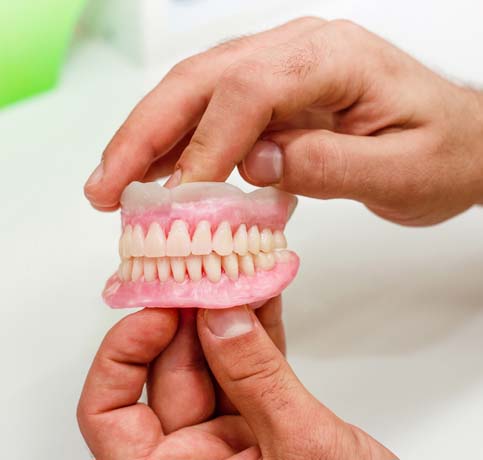
The BPS, or biofunctional prosthetic system, offers a set of full dentures that meet standards for comfort, functionality, and appearance. Advanced instrumentation is utilized to capture every detail of your face, Exactly like the way you smile, and reconstruct the natural shape of your lips and facial muscles.